Kyle Tucker’s Perplexing Market Makes Cubs Reunion Slightly More Likely

Christmas is over, which means 2026 is right around the corner. Once the weekend passes, the hot stove should start warming back up to at least a lukewarm temperature. Speaking of lukewarm, the weather has been quite different from what is normally a windy and frigid time of year in Illinois. I say this as it is quickly becoming windy and frigid again, but the point still stands.
Kazuma Okamoto and Tatsuya Imai have to choose teams in the first week of January, which should jumpstart the offseason. In what has become an increasingly common trend, a large portion of the free agent market has yet to find a new home. Okamoto’s destination could impact Alex Bregman’s destination, with several teams in on the latter also looking toward the former as a pivot option. If a team in need of starting pitching does not sign Imai, they may look toward the trade market, upping the demand for several available arms.
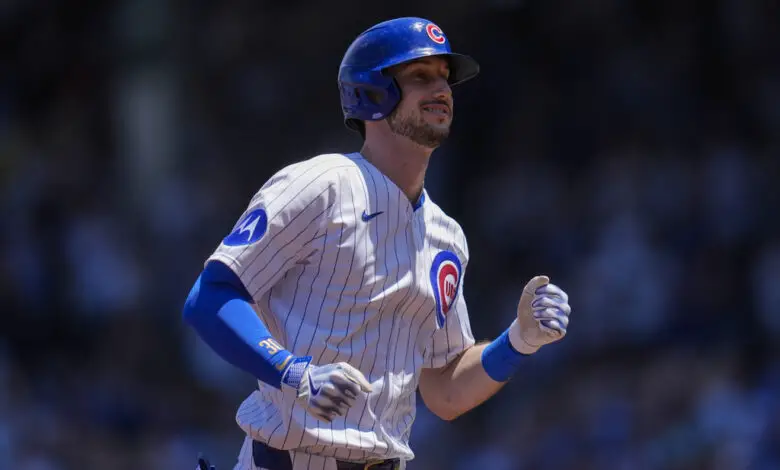
The biggest free agent of them all is Kyle Tucker, whose market is quite perplexing. When the Cubs traded for Tucker in December of 2024, all discussions focused on a possible extension. The Astros received a large return for the superstar, which fans immediately thought meant the Cubs would try to extend Tucker to make the deal worth it. It became clear that an extension was unlikely, and a deal was not reached.
Tucker’s tenure in Chicago had a lot of ups and downs, resulting in a mostly unfufilling year. When he was on the field and healthy, Tucker was a key catalyst in the team’s success. His lack of production down the stretch, however, led to many to question whether the trade was a bust. Joel Sherman of the New York Post discussed Tucker’s mindset as a potential red flag, saying that he may not have the drive to get better and stay on the field. That does not bode well when a team is looking to make a long-term investment in a player.
What matters most at the end of the day is that Tucker is undeniably the most talented player in this free agent class. His 136 wRC+ across 136 games won him a Silver Slugger, making him the first Cubs outfielder to earn that honor since Sammy Sosa in 2002. Tucker gave the team a superstar bat, which immediately elevated the lineup’s offensive production.
Various contract projections have circulated throughout the offseason, but it does not seem as though Tucker will get the $400 million deal that seemed like a given earlier this year. He missed significant time due to injuries in each of the last two years, which is likely one of the factors stopping teams from offering the mega-deal he wants. The Blue Jays have been discussed as a team that could bid the most for Tucker’s services, but the fact that he has yet to sign indicates that his price hasn’t been met.
The impending lockout has many teams worried about giving out deals that last well beyond 2026, fearing there will be new rules governing the sport’s financial structure. Short-term deals with a high average annual value have become more common in recent years, with Bregman as a perfect example. After realizing that he was not going to get the money or duration he wanted last winter, the third baseman accepted a three-year deal with opt-outs after each of the first two years. He had an impressive season and is now looking for a longer deal once again.
Paul Hembekides and Buster Olney, both of ESPN, recently discussed Tucker’s free agency and potential frameworks for a deal. Hembekides proposed two short-term deals that could appeal to both teams and player. The first is a two-year deal worth $104 million ($52 million AAV), with Tucker receiving a player option after the 2026 season. His second idea was a four-year contract worth $172 million ($43 million AAV) with a player option after the second year.
Absent a megacontract from Toronto, a couple Kyle Tucker contract frameworks:
⚾️ 1+1: $52M/yr (PO after 2026)
⚾️ 2+2: $43M/yr (PO after 2027)Every big-market club — especially Houston — should kick the tires. pic.twitter.com/8c2lSpdx2t
— Paul Hembekides (Hembo) (@PaulHembo) December 26, 2025
It has been said that the only way Tucker returns to Chicago is if something goes really wrong in his free agency, and this may be that instance. Among the things we know about Jed Hoyer and the Cubs is that they love short-term deals, especially those involving options.
Giving Tucker either of the deals mentioned above would require the Cubs to exceed the first luxury tax threshold, but that may be something Tom Ricketts is willing to do in the short term. All indications have pointed toward the Cubs being somewhat wary of the lockout, but the two-year deal could be a great way to be aggressive and win now while also minimizing financial commitments past 2026.
A reunion between the Cubs and Tucker still feels very unlikely, but the market being weaker than expected makes it seem a little less crazy than it once did.